 (from page 8 of the 2015 Collection)
Specifications are on the back listing that the first generation Mustang had a body based on the Falcon platform. The text reads, Ford Mustang's lunch in 1964 now is part of auto industry lore. It was the most successful vehicle launch in automotive history. "Mustang Mani" gripped the nation like nothing before or since. This "American sports car," with its long hood, short rear deck, good performance and handling, reliability, and affordable price, struck a chord among buyers that obliterated even the most optimistic sales forecasts - more than a million sold in less than two years. With such a hit on their hands, Ford quickly realized that a higher-performance version was necessary - one that would satisfy hard-core performance enthusiasts and also make a competitive race car. So Ford's collaboration with Carroll Shelby was established, which resulted in the original GT350 - today one of the most sought-after collector cars. By 1967, "pony car wars" among Detroit's Big 3 were in full swing, and Mustang received its first big block - the 390 cid, 320 hp V8. Also, Shelby introduced the GT500 with a 428 V8 that produced 355 hp. Then, in 1968, the 302 small block made its appearance, as did the now-legendary 428 Cobra Jet, developed for drag racing by Ford dealer Bob Tasca in Providence, R.I., and later adapted for series production.
(from page 8 of the 2015 Collection)
Specifications are on the back listing that the first generation Mustang had a body based on the Falcon platform. The text reads, Ford Mustang's lunch in 1964 now is part of auto industry lore. It was the most successful vehicle launch in automotive history. "Mustang Mani" gripped the nation like nothing before or since. This "American sports car," with its long hood, short rear deck, good performance and handling, reliability, and affordable price, struck a chord among buyers that obliterated even the most optimistic sales forecasts - more than a million sold in less than two years. With such a hit on their hands, Ford quickly realized that a higher-performance version was necessary - one that would satisfy hard-core performance enthusiasts and also make a competitive race car. So Ford's collaboration with Carroll Shelby was established, which resulted in the original GT350 - today one of the most sought-after collector cars. By 1967, "pony car wars" among Detroit's Big 3 were in full swing, and Mustang received its first big block - the 390 cid, 320 hp V8. Also, Shelby introduced the GT500 with a 428 V8 that produced 355 hp. Then, in 1968, the 302 small block made its appearance, as did the now-legendary 428 Cobra Jet, developed for drag racing by Ford dealer Bob Tasca in Providence, R.I., and later adapted for series production.
 (from page 8 of the 2015 Collection)
A yellow 1970 Mustang Boss 302 is featured on the 1969-1973, 50th anniversary Mustang Hero Card. Also shown is the 1969 Mustang Mach 1, 1971 Mustang Boss 351, 1972 Mustang Sprint sportsroof, and 1973 Mustang Mach 1.
(from page 8 of the 2015 Collection)
A yellow 1970 Mustang Boss 302 is featured on the 1969-1973, 50th anniversary Mustang Hero Card. Also shown is the 1969 Mustang Mach 1, 1971 Mustang Boss 351, 1972 Mustang Sprint sportsroof, and 1973 Mustang Mach 1.
 (from page 8 of the 2015 Collection)
The 1969 to 1973 Mustang is still considered the first generation Mustang and was built on the Falcon platform. The text reads, By 1969, Ford was making Mustang bigger and more luxurious, to broaden its appeal to a larger audience. The 1969 models included a new SportsRoof body style that replace the 2+2 Fastback. They still had the 108-inch wheelbase, but were almost six inches longer overall than the original. More than 80 percent of buyers were opting for a V8 engine, reinforcing the need for more muscle. The 220 hp 302 was the base V8, and the new 351 "Windsor" V8, the 390 V8, the 428 Cobra Jet and Super Cobra Jet V8s also were available. Something new as available, too: the "Boss" 302 and 429 engines. The Boss 302's goals were to be the best-handling street car available in America, and to help Ford win the SCCA Trans-Am championship. With a big boost from Parnelli Jones' 1970 Trans-Am championship victory, the Boss 302 became what is arguably the single most iconic Mustang of all time. Indeed, 43 years later, Ford would successfully emulate and update the original Boss 302's exquisite balance of power and handling with a 21st century version. The Falcon platform's wheelbase for the 1971-73 Mustang was stretched on inch, 109 - necessary because Mustang's growth spurt now made it a full foot longer than the original - and heavier by some 600 pounds. The last year for the big Mustangs - and, for a decade, Mustang convertibles - was 1973. Rising insurance costs and gas prices, federal emissions standards and an OPEC oil embargo on the near horizon, combined to spell the end of the muscle car era.
(from page 8 of the 2015 Collection)
The 1969 to 1973 Mustang is still considered the first generation Mustang and was built on the Falcon platform. The text reads, By 1969, Ford was making Mustang bigger and more luxurious, to broaden its appeal to a larger audience. The 1969 models included a new SportsRoof body style that replace the 2+2 Fastback. They still had the 108-inch wheelbase, but were almost six inches longer overall than the original. More than 80 percent of buyers were opting for a V8 engine, reinforcing the need for more muscle. The 220 hp 302 was the base V8, and the new 351 "Windsor" V8, the 390 V8, the 428 Cobra Jet and Super Cobra Jet V8s also were available. Something new as available, too: the "Boss" 302 and 429 engines. The Boss 302's goals were to be the best-handling street car available in America, and to help Ford win the SCCA Trans-Am championship. With a big boost from Parnelli Jones' 1970 Trans-Am championship victory, the Boss 302 became what is arguably the single most iconic Mustang of all time. Indeed, 43 years later, Ford would successfully emulate and update the original Boss 302's exquisite balance of power and handling with a 21st century version. The Falcon platform's wheelbase for the 1971-73 Mustang was stretched on inch, 109 - necessary because Mustang's growth spurt now made it a full foot longer than the original - and heavier by some 600 pounds. The last year for the big Mustangs - and, for a decade, Mustang convertibles - was 1973. Rising insurance costs and gas prices, federal emissions standards and an OPEC oil embargo on the near horizon, combined to spell the end of the muscle car era.
 (from page 8 of the 2015 Collection)
A white 1977 Mustang II Cobra II is featured on the front of the 1974-1978 Mustang, 50th anniversary, Here Card. Below is shown a 1974 Mustang II hatchback, 1975 Mustang II Ghia, 1976 Mustang II Mach 1, and 1978 Mustang II King Cobra.
(from page 8 of the 2015 Collection)
A white 1977 Mustang II Cobra II is featured on the front of the 1974-1978 Mustang, 50th anniversary, Here Card. Below is shown a 1974 Mustang II hatchback, 1975 Mustang II Ghia, 1976 Mustang II Mach 1, and 1978 Mustang II King Cobra.
 (from page 8 of the 2015 Collection)
The second generation Mustang based on the "Arizona platform" is described on the back of the promotional card. "Arizona" was the code name of the platform design which was a modified version of the Maverick. The text reads, Ford met the challenge of high fuel prices and new emissions standards with Mustang II, built on the Arizona platform that also underpinned the Pinto. Lee Iacocca, now president of Ford, championed this new Mustang as "the right car for the right time." Judging by its sales success, Mustang II was just that. Ford dealers sold more than a million of them during its five years of production. The award-winning 1974 Mustang II also happens to be the only year in Mustang's history to date when a V8 engine was not available. Model lineup was the base Hardtop, the 2+2 Fastback, the more upscale Mach 1 2+2, and the Ghia Hardtop. V8 power - a 302 - returned in 1975, available in any of the models. It produced 122 hp with a 2-barrel carburetor - just 14 hp lower than the 302 in the vastly bigger and heavier 1973 car. Ford launched the Cobra II in 1976 to elevate Mustang's power image. Few in the company had high expectations for this limited-edition option package, but Cobra II sold so well it became a regular production option for 1977 and '78. Its 302 V8 produced 139hp, which was about the same as the 1973 Mach 1's 302. The last hurrah for Mustang II was 1978's King Cobra - the first Mustang to sport the "5.0" designation for the 302's metric displacement.
(from page 8 of the 2015 Collection)
The second generation Mustang based on the "Arizona platform" is described on the back of the promotional card. "Arizona" was the code name of the platform design which was a modified version of the Maverick. The text reads, Ford met the challenge of high fuel prices and new emissions standards with Mustang II, built on the Arizona platform that also underpinned the Pinto. Lee Iacocca, now president of Ford, championed this new Mustang as "the right car for the right time." Judging by its sales success, Mustang II was just that. Ford dealers sold more than a million of them during its five years of production. The award-winning 1974 Mustang II also happens to be the only year in Mustang's history to date when a V8 engine was not available. Model lineup was the base Hardtop, the 2+2 Fastback, the more upscale Mach 1 2+2, and the Ghia Hardtop. V8 power - a 302 - returned in 1975, available in any of the models. It produced 122 hp with a 2-barrel carburetor - just 14 hp lower than the 302 in the vastly bigger and heavier 1973 car. Ford launched the Cobra II in 1976 to elevate Mustang's power image. Few in the company had high expectations for this limited-edition option package, but Cobra II sold so well it became a regular production option for 1977 and '78. Its 302 V8 produced 139hp, which was about the same as the 1973 Mach 1's 302. The last hurrah for Mustang II was 1978's King Cobra - the first Mustang to sport the "5.0" designation for the 302's metric displacement.
 (from page 8 of the 2015 Collection)
A red 1982 Mustang GT is featured on the 1979-1986, 50th Anniversary, Mustang Hero Card. Below is shown a 1980 Mustang LX coupe, 1983 Mustang GLX convertible, 1984 Mustang SVO, and 1985 Mustang GT.
(from page 8 of the 2015 Collection)
A red 1982 Mustang GT is featured on the 1979-1986, 50th Anniversary, Mustang Hero Card. Below is shown a 1980 Mustang LX coupe, 1983 Mustang GLX convertible, 1984 Mustang SVO, and 1985 Mustang GT.
 (from page 8 of the 2015 Collection)
On the back is information on the 3rd generation Mustang based on the Fox platform for 1979 to 1986. The text reads, On the new Fox platform, the 1979 Mustang was four inches longer than a Mustang II, but some 200 pounds lighter, its angular, wedge-shaped design was in no way reminiscent of the original; it was a new Mustang and a new direction. The array of engines included an inline 4, a V6, an inline 6, and the 5.0-liter V8 with 140hp. A more fuel efficient, 4.2-liter version of the 5.0, with 120 hp, became the V8 option for 1980 and '81. Mustang's real performance revival began in 1982 with the new Mustang GT. Its "High Output" 5.0 V* produced 157hp, the most of any Mustang since 1971. V8 sales soared. The next year, Mustang became available as a convertible model for the first time in a decade. That same year a 4-barrel carburetor helped raise the 5.0 V8's output to 175 hp. Ford's new performance division, Special Vehicle Operations, launched the Mustang SVO in 1984. This true "driver's car" had a 2.3-liter turbo engine with 175 hp, 210 lb.-ft. of torque, 4-wheel disc brakes, racing-engineered suspension, and some functional and distinctive aero treatments. It received critical acclaim, but lack of success in the showroom ended the Mustang SVO's run in 1986. Another era ended in 1985, when the last Mustangs with carburetors were produced. Sequential port fuel injection was available for the 5.0 V8, which also got a roller-cam valvetrain, and its output went up to 210 hp.
(from page 8 of the 2015 Collection)
On the back is information on the 3rd generation Mustang based on the Fox platform for 1979 to 1986. The text reads, On the new Fox platform, the 1979 Mustang was four inches longer than a Mustang II, but some 200 pounds lighter, its angular, wedge-shaped design was in no way reminiscent of the original; it was a new Mustang and a new direction. The array of engines included an inline 4, a V6, an inline 6, and the 5.0-liter V8 with 140hp. A more fuel efficient, 4.2-liter version of the 5.0, with 120 hp, became the V8 option for 1980 and '81. Mustang's real performance revival began in 1982 with the new Mustang GT. Its "High Output" 5.0 V* produced 157hp, the most of any Mustang since 1971. V8 sales soared. The next year, Mustang became available as a convertible model for the first time in a decade. That same year a 4-barrel carburetor helped raise the 5.0 V8's output to 175 hp. Ford's new performance division, Special Vehicle Operations, launched the Mustang SVO in 1984. This true "driver's car" had a 2.3-liter turbo engine with 175 hp, 210 lb.-ft. of torque, 4-wheel disc brakes, racing-engineered suspension, and some functional and distinctive aero treatments. It received critical acclaim, but lack of success in the showroom ended the Mustang SVO's run in 1986. Another era ended in 1985, when the last Mustangs with carburetors were produced. Sequential port fuel injection was available for the 5.0 V8, which also got a roller-cam valvetrain, and its output went up to 210 hp.
 (from page 8 of the 2015 Collection)
A Calypso Green 1993 SVT Mustang Cobra is featured on the front of the 1987-1993, 50th Anniversary Mustang Hero Card. Significant models shown below are the 1987 Mustang GT, 1989 Mustang convertible, 1990 Mustang GT convertible, and the 1993 Mustang GT.
(from page 8 of the 2015 Collection)
A Calypso Green 1993 SVT Mustang Cobra is featured on the front of the 1987-1993, 50th Anniversary Mustang Hero Card. Significant models shown below are the 1987 Mustang GT, 1989 Mustang convertible, 1990 Mustang GT convertible, and the 1993 Mustang GT.
 (from page 8 of the 2015 Collection)
Information on the second half of the 3rd generation Mustang is featured on the back. The text reads, For the final years of Fox platform production, Mustang went through turbulent, and for its fans, troubling times. Word spread that the legendary car would be discontinued. Even worse - at least for Mustang enthusiasts - the name might be used for a front-wheel-drive compact car, built by Mazda. All that came to a head in 1987, when Mustang's redesign produced a much smoother and more aerodynamic look. Unfortunately, sales figures that had been seeing encouraging increases since 1983, dropped again. Several things saved the day: Thousands of Mustang fans made known their feelings about either scrapping the car or giving its name to a front-drive Mazda and Ford got the message. Executives Bob Rewey and Neil Ressler were two who took the enthusiasts uproar to heart. Rewey helped repeat the front-drive Mazda-Mustang program, then he and Ressler put Ford back in the niche performance vehicle market with the non-mainstream Special Vehicle Team. SVT's first creation was the 1993 SVT Mustang Cobra. The success of this limited edition car, and many more cars and trucks to follow, made SVT a model for niche vehicle engineering and marketing in the industry. Meanwhile, another passionate team, lead by John Coletti, was working hard on a new, fourth generation Mustang, to be launched for model year 1994. The new car's success (or lack of it) would make or break the Mustang nameplate.
(from page 8 of the 2015 Collection)
Information on the second half of the 3rd generation Mustang is featured on the back. The text reads, For the final years of Fox platform production, Mustang went through turbulent, and for its fans, troubling times. Word spread that the legendary car would be discontinued. Even worse - at least for Mustang enthusiasts - the name might be used for a front-wheel-drive compact car, built by Mazda. All that came to a head in 1987, when Mustang's redesign produced a much smoother and more aerodynamic look. Unfortunately, sales figures that had been seeing encouraging increases since 1983, dropped again. Several things saved the day: Thousands of Mustang fans made known their feelings about either scrapping the car or giving its name to a front-drive Mazda and Ford got the message. Executives Bob Rewey and Neil Ressler were two who took the enthusiasts uproar to heart. Rewey helped repeat the front-drive Mazda-Mustang program, then he and Ressler put Ford back in the niche performance vehicle market with the non-mainstream Special Vehicle Team. SVT's first creation was the 1993 SVT Mustang Cobra. The success of this limited edition car, and many more cars and trucks to follow, made SVT a model for niche vehicle engineering and marketing in the industry. Meanwhile, another passionate team, lead by John Coletti, was working hard on a new, fourth generation Mustang, to be launched for model year 1994. The new car's success (or lack of it) would make or break the Mustang nameplate.
 (from page 9 of the 2015 Collection)
A yellow 1994 Mustang GT is featured on the 1994 to 2004, 50th anniversary, Mustang Hero Card. Significant models shown below include the 1996 SVT Mustang Cobra, 1993 Mustang 35th Anniversary GT convertible, 2001 Mustang Bullitt GT, and the 2003 SVT Mustang Cobra.
(from page 9 of the 2015 Collection)
A yellow 1994 Mustang GT is featured on the 1994 to 2004, 50th anniversary, Mustang Hero Card. Significant models shown below include the 1996 SVT Mustang Cobra, 1993 Mustang 35th Anniversary GT convertible, 2001 Mustang Bullitt GT, and the 2003 SVT Mustang Cobra.
 (from page 9 of the 2015 Collection)
The fourth generation Mustang based on the SN95 platform is described on this page. The text reads, Launched in Mustang's 30th anniversary year, the fourth-generation Mustang got it right, and gave Mustang a new lease on life. The design successfully gave Mustang a stylish, contemporary look and also evoked earlier generations of Mustangs. There was a 2-door fastback coupe and a convertible, each one powered either by a base 3.8-liter V6 (145 hp), or a 5.0-liter V8 (215 hp) in GT trim. Also that year, SVT wasted no time launching their high-performance version, the 1994 SVT Mustang Cobra whose 5.0 V8 produced 240 hp. The single-overhead-cam, 4.6-liter "Modular" V8 became the GT's powerplant in 1996, with the same 215 hp as the pushrod 5.0. SVT produced a new Mustang Cobra, also with the 4.6-liter V8, but sporting all-aluminum construction and dual overhead cams. This version produced 305 hp. Mustang received refreshed, more aggressive styling in 1999, and also more power - 195 hp for the V6 and 260 for the GT's SOHC V8. The new '99 SVT Cobra boasted 320 hp, but its most notable claim to fame was its independent rear suspension system - the first ever on a Mustang. The new millennium brought SVT's third (and last) racing version of the Cobra, the 2000 Cobra R. This one used a 5.4-liter DOHC V8 to produce 385 hp, and was the first Mustang with a 6-speed transmission. It was the fastest Mustang ever (so far) and also the most expensive (msrp $55,845). In 2003, Ford paid tribute to a famous Mustang of the past - the Mach 1 with the 1996 Cobra's 305 hp DOHC V8. With a 50th-generation coming, SVT decided to send the current Mustang out with a bang, it was code named "Terminator," and became the 2003 SVT Cobra. Power - all 390 hp and 390 lb.-ft. - came from a supercharged 4.6-liter V8 and made the '03 Cobra the most powerful production Mustang ever.
(from page 9 of the 2015 Collection)
The fourth generation Mustang based on the SN95 platform is described on this page. The text reads, Launched in Mustang's 30th anniversary year, the fourth-generation Mustang got it right, and gave Mustang a new lease on life. The design successfully gave Mustang a stylish, contemporary look and also evoked earlier generations of Mustangs. There was a 2-door fastback coupe and a convertible, each one powered either by a base 3.8-liter V6 (145 hp), or a 5.0-liter V8 (215 hp) in GT trim. Also that year, SVT wasted no time launching their high-performance version, the 1994 SVT Mustang Cobra whose 5.0 V8 produced 240 hp. The single-overhead-cam, 4.6-liter "Modular" V8 became the GT's powerplant in 1996, with the same 215 hp as the pushrod 5.0. SVT produced a new Mustang Cobra, also with the 4.6-liter V8, but sporting all-aluminum construction and dual overhead cams. This version produced 305 hp. Mustang received refreshed, more aggressive styling in 1999, and also more power - 195 hp for the V6 and 260 for the GT's SOHC V8. The new '99 SVT Cobra boasted 320 hp, but its most notable claim to fame was its independent rear suspension system - the first ever on a Mustang. The new millennium brought SVT's third (and last) racing version of the Cobra, the 2000 Cobra R. This one used a 5.4-liter DOHC V8 to produce 385 hp, and was the first Mustang with a 6-speed transmission. It was the fastest Mustang ever (so far) and also the most expensive (msrp $55,845). In 2003, Ford paid tribute to a famous Mustang of the past - the Mach 1 with the 1996 Cobra's 305 hp DOHC V8. With a 50th-generation coming, SVT decided to send the current Mustang out with a bang, it was code named "Terminator," and became the 2003 SVT Cobra. Power - all 390 hp and 390 lb.-ft. - came from a supercharged 4.6-liter V8 and made the '03 Cobra the most powerful production Mustang ever.
 (from page 9 of the 2015 Collection)
A yellow 2012 Mustang Boss 302 is featured on the 2005-2014, 50th anniversary, Mustang Hero Card. Significant models shown include the 2005 Mustang GT, 2008 Mustang GT California Special, 2011 Mustang GT convertible, and the 2013 Mustang GT500.
(from page 9 of the 2015 Collection)
A yellow 2012 Mustang Boss 302 is featured on the 2005-2014, 50th anniversary, Mustang Hero Card. Significant models shown include the 2005 Mustang GT, 2008 Mustang GT California Special, 2011 Mustang GT convertible, and the 2013 Mustang GT500.
 (from page 9 of the 2015 Collection)
This page has a description of the 5th generation Mustang from 2005 to 2014. The text reads, This generation, on a new, state-of-the-art platform, was a true return to the original's roots, with unmistakable cues from Mustang's early glory days. The 2005 Mustang's base 4.0-liter V6 produced 210 hp, while the GT's 4.6-liter V8 packed 300 hp. And those numbers just went up, even though it took a while for the V6 and GT. The big news of 2007 was the new Shelby GT500, with its supercharged, 500 hp 5.4-liter V8, race-tuned suspension, and Brembo brakes with 4-piston calipers. By 2010, Chevrolet had re-launched the Camaro, with a 300 hp V6 engine - almost as much as the Mustang GT. The Camaro 6.2-liter V8 had 422 hp. Mustang had to respond, and did. Two completely new powertrains arrived in 2011, both with 6-speed transmissions. The 3.7-liter V6, with twin independent variable cam timing (Ti-VCT), produced 305 hp and 289 lb.-ft. of torque, yet had an estimated EPA mileage of 19 city and 31 highway. For the GT, a legendary name returned - a new 5.0. This DOHC V8 produced 412hp and 390 lb.-ft. of torque, and could launch form 0 to 60 slightly quicker than the Camaro V8. The GT's estimated EPA mileage was 17 city and 26 highway. Like the V6, it was a lot more power combined with better gas mileage. Another legend returned in 2012 - the Boss 302 - one of those cars whose legendary status has actually grown over the years, even though the name was not in use. Reviving such a car is risky because it has to live up to the legend. The new Boss 302 did, and a lot more. Then, along came the 213 Shelby GT500 - the fastest, most powerful Mustang yet: 662 hp, 631 lb.-ft. of torque, and a top speed in excess of 200 mph. it added a whole new meaning to the saying, "You can never have too much horsepower." And for the model year 2015, the 6th generation of this American icon takes Mustang into its second 50 years.
(from page 9 of the 2015 Collection)
This page has a description of the 5th generation Mustang from 2005 to 2014. The text reads, This generation, on a new, state-of-the-art platform, was a true return to the original's roots, with unmistakable cues from Mustang's early glory days. The 2005 Mustang's base 4.0-liter V6 produced 210 hp, while the GT's 4.6-liter V8 packed 300 hp. And those numbers just went up, even though it took a while for the V6 and GT. The big news of 2007 was the new Shelby GT500, with its supercharged, 500 hp 5.4-liter V8, race-tuned suspension, and Brembo brakes with 4-piston calipers. By 2010, Chevrolet had re-launched the Camaro, with a 300 hp V6 engine - almost as much as the Mustang GT. The Camaro 6.2-liter V8 had 422 hp. Mustang had to respond, and did. Two completely new powertrains arrived in 2011, both with 6-speed transmissions. The 3.7-liter V6, with twin independent variable cam timing (Ti-VCT), produced 305 hp and 289 lb.-ft. of torque, yet had an estimated EPA mileage of 19 city and 31 highway. For the GT, a legendary name returned - a new 5.0. This DOHC V8 produced 412hp and 390 lb.-ft. of torque, and could launch form 0 to 60 slightly quicker than the Camaro V8. The GT's estimated EPA mileage was 17 city and 26 highway. Like the V6, it was a lot more power combined with better gas mileage. Another legend returned in 2012 - the Boss 302 - one of those cars whose legendary status has actually grown over the years, even though the name was not in use. Reviving such a car is risky because it has to live up to the legend. The new Boss 302 did, and a lot more. Then, along came the 213 Shelby GT500 - the fastest, most powerful Mustang yet: 662 hp, 631 lb.-ft. of torque, and a top speed in excess of 200 mph. it added a whole new meaning to the saying, "You can never have too much horsepower." And for the model year 2015, the 6th generation of this American icon takes Mustang into its second 50 years.
 (from page 9 of the 2015 Collection)
A red 2015 Mustang GT is featured on the newest 50th anniversary Hero Card. This is the 6th generation Mustang bodyline. See the next page for more information.
(from page 9 of the 2015 Collection)
A red 2015 Mustang GT is featured on the newest 50th anniversary Hero Card. This is the 6th generation Mustang bodyline. See the next page for more information.
 (from page 9 of the 2015 Collection)
The new 2015 Mustang is described here. The text reads, Mustang began its second half-century as another new-from-the-ground-up car. In all aspects, the first of the sixth generation is true to its roots: it looks like a Mustang, especially those of its golden years in the late-1960s. It has the iconic long hood, short rear deck, and low, wide stance. It is rear-wheel drive. From there, though, the "new" aspects kick into high gear. It may evoke the golden era, but its design is very much 21st century, and under its skin, the new Mustang benefits from state-of-the-art engineering and technology. This is the first mainstream Mustang with independent rear suspension, engineered specifically for this new platform and the car that's built on it. The all new front suspension is a perimeter subframe and double ball joint architecture. Three engines are available, two of them familiar. There's the 3.7-liter Ti-VCT V6 and the GT's 5.0-liter Ti-VCT V8, both with new tweaks and upgrades. Then there's an entirely new engine - a 2.3-liter EcoBoost inline 4 with a twin-scroll turbocharger. This is Mustang's first 4-cylinder engine since the Mustang SVO's 2.3-liter turbo 4 of 1984-86. That engine produced 175hp and 210 lb.-ft. of torque. But 30 years on, advancements in engineering and technology, like direction injection and twin independent variable cam timing, mean that this new 2.3-liter EcoBoost produces power that surpasses Mustang's V8 engines of the early 1980s. All told, everything about this next-generation Mustang is at once new, but without breaking from tradition. So Mustang can gallop into the future following the legacy of its predecessors, but leading the pack.
(from page 9 of the 2015 Collection)
The new 2015 Mustang is described here. The text reads, Mustang began its second half-century as another new-from-the-ground-up car. In all aspects, the first of the sixth generation is true to its roots: it looks like a Mustang, especially those of its golden years in the late-1960s. It has the iconic long hood, short rear deck, and low, wide stance. It is rear-wheel drive. From there, though, the "new" aspects kick into high gear. It may evoke the golden era, but its design is very much 21st century, and under its skin, the new Mustang benefits from state-of-the-art engineering and technology. This is the first mainstream Mustang with independent rear suspension, engineered specifically for this new platform and the car that's built on it. The all new front suspension is a perimeter subframe and double ball joint architecture. Three engines are available, two of them familiar. There's the 3.7-liter Ti-VCT V6 and the GT's 5.0-liter Ti-VCT V8, both with new tweaks and upgrades. Then there's an entirely new engine - a 2.3-liter EcoBoost inline 4 with a twin-scroll turbocharger. This is Mustang's first 4-cylinder engine since the Mustang SVO's 2.3-liter turbo 4 of 1984-86. That engine produced 175hp and 210 lb.-ft. of torque. But 30 years on, advancements in engineering and technology, like direction injection and twin independent variable cam timing, mean that this new 2.3-liter EcoBoost produces power that surpasses Mustang's V8 engines of the early 1980s. All told, everything about this next-generation Mustang is at once new, but without breaking from tradition. So Mustang can gallop into the future following the legacy of its predecessors, but leading the pack.
 (from page 9 of the 2015 Collection)
This huge poster celebrates the 50th anniversary of the Mustang showing the 52 Mustangs, one for each year including 1964 and 2015. See the next page for a larger view.
(from page 9 of the 2015 Collection)
This huge poster celebrates the 50th anniversary of the Mustang showing the 52 Mustangs, one for each year including 1964 and 2015. See the next page for a larger view.
 (from page 9 of the 2015 Collection)
Larger view of the Mustang 50th Anniversary poster.
(from page 9 of the 2015 Collection)
Larger view of the Mustang 50th Anniversary poster.
 (from page 9 of the 2015 Collection)
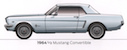
1964 Mustang convertible
(from page 9 of the 2015 Collection)
1964 Mustang convertible
 (from page 9 of the 2015 Collection)
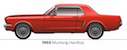
1965 Mustang hardtop
(from page 9 of the 2015 Collection)
1965 Mustang hardtop
 (from page 9 of the 2015 Collection)
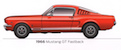
1965 Mustang GT fastback
(from page 9 of the 2015 Collection)
1965 Mustang GT fastback

 PrevPage